Friday, July 24, 2020

Covenant Presbyterian Church

Sunday morning Foundations Classes
God's Positioning System (GPS)


Angels/Demons & the End Times -- Lesson #8
(press or click on a slide to enlarge it)
scroll down for earlier lessons in descending order
You can click on earlier lesson by date to the right "Blog Archive".
(Lessons are posted once a week on Friday afternoon
For Lesson #1 click on 5/31 at Blog Archive.

We can’t see angels and demons, but they are real and active in the world. How do we know for sure? For one thing, Paul tells us in his letter to the Ephesians that a spiritual battle is taking place—the powers of this dark world and the spiritual forces of evil in the heavenly realms (Eph. 6:12-18). And yes, we can see Satan’s influence on the behavior of man. We can only imagine how bad it would get if God withdrew His angels who are literally restraining Satan’s demonic angels from their full fury.

I remember road trips when my kids were young, and a frequently asked question, ”Are we there yet?” As I watch the evening news—the destruction and looting, attacks on police, defacing and destruction of national monuments, I can’t help but ask myself that same question: Are we there yet? 


Have you read it? Did you struggle through it? Did you search the web for opinions? Did you search the Bible for related verses? Did you do all of the above? Many have done all of the above and still come to different conclusions. So who’s right? It is a book full of symbolism, and is not in chronical order, all of which makes it difficult to understand without a lot of digging and studying, and then some. What about the first century Christians, did they fully understand it?


Chart shows a brief overview of the Book of Revelation, chapter by chapter, with the principle message of each. The Great Tribulation appears in chapters 6-18. The only place the Apostle John sees part of the church in the Great Tribulation period is in chapter 7 but he sees it when in heaven; which helps support a pre-tribulation rapture but heightened the debate for others.


This study isn’t to promote any specific view over the others (why I haven’t mentioned mine). My intent is to explain each view with the information that is available. At times it appears that Scripture may be giving us a hint that favors a particular view. But if it was 100% conclusive, everyone would readily agree, but they don’t, so it isn’t. Expert opinions I have read, state that there are problems with all of the views. Again, if it was crystal clear, there would be one view and not three or even four. Nevertheless, most will tend to favor one view over the others, me too, which is to be expected. 


I have been researching this study topic for quite some time, and there are strong opinions for all of the views, with scriptural texts for each. As stated in the last lesson, our perception of what we read is based on a lot of factors, and some people are much more perceptive than others, and consequently make better detectives even in what the symbolism in Revelation means. So, who’s right??? Watching history unfold on the evening may provide clues… or not! 


Today’s news may very well be tomorrow’s history lesson. People living in John’s time, saw much of the contents of his letter as being related to the Roman Empire. Perhaps, as history and events unfold, and there are increasing hints of an emerging antichrist, people will slowly or suddenly recognize it as applying to our own times. 

What is the role of the Church in the eyes of God? Isn’t it to faithfully preach the Gospel of saving grace, and that we are sinners in need of a Savior, and that Savior is Jesus Christ? Our study of the End Times is God’s mystery that He will unfold in due time and at just the right moment. It should not be cause for discord in the Church—because all the evidence isn’t in yet—but it certainly is a time to be alert, which is what I hope for from this study. 


This chart highlights the 7 Churches that John records Jesus’ message to, in chapters 1-3. It lays it out from a historical perspective with a timeline and period for each of the 7 churches, and key theme for each. The chart equates today’s church with Laodicea because of its apostacy. The chart also includes other related historical events. Revelation is seen as a warning to the church, both then and now. Being a history guy, myself, seeing the Bible’s relevance to history is what caught my eye with this chart. I wouldn’t just sluff it off or rule it out as such.


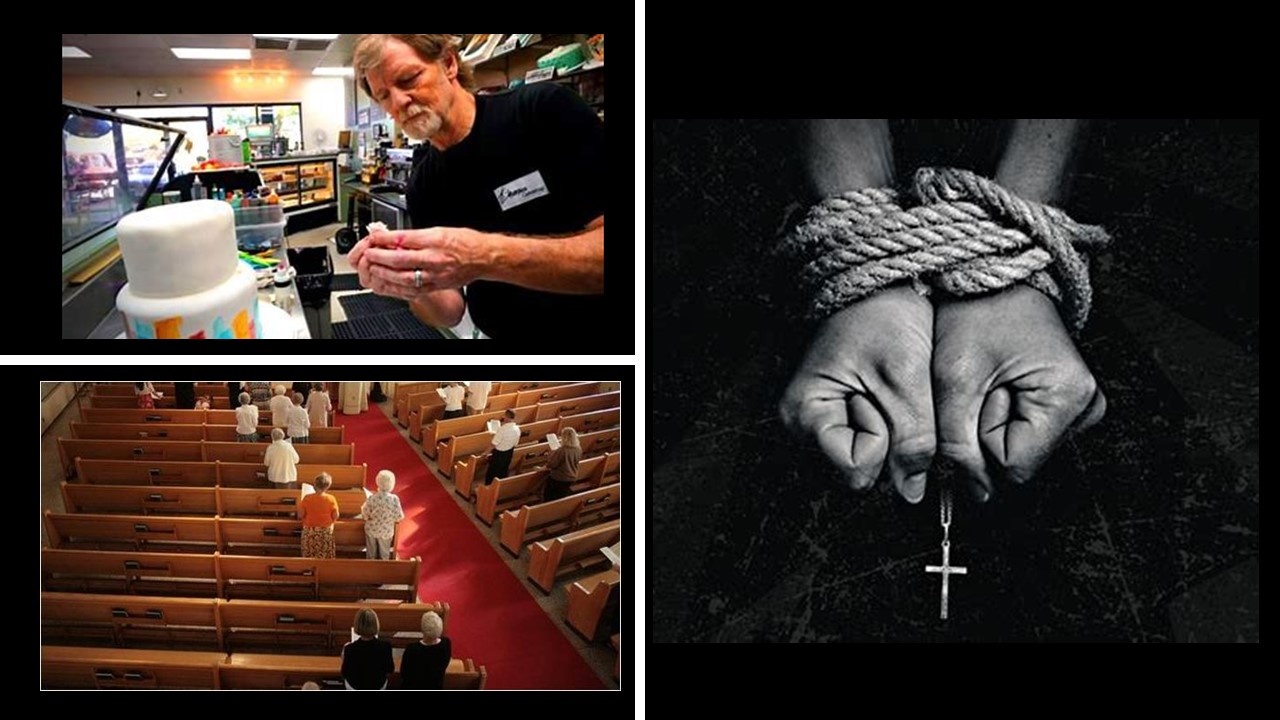
We are seeing a great deal of apostasy in some mainline denominations who have abandoned the biblical gospel of saving grace, substituting a social message. They may be in the church, but certainly are not of the Church. The photos speak volumes about the state of the church in America (and Europe). 

This chart shows the pre-tribulation and mid-tribulation Raptures. I believe pictures do a better job in explaining something rather than hundreds of words. The pictures put the words into perspective making it a lot easier to grasp the message, regardless of where one inserts the Rapture. The Bible verses noted pertain to those particular events. Rev. 4:1 is John’s rapture to heaven, where he witnessed the prophesies written about in Revelation. 


When we think of the Rapture, this is what most envision. The Church isn’t of one voice on the End Time events. Are they real or just symbolism? One of the things that comes to mind when we hear “End Times” is the Rapture. The 2005 “Left Behind” TV series and a number of books depicting the Rapture brought it to the forefront of modern evangelical thinking. 


This points back to the opening slide. Are we closer than we think? Again, the state of affairs in America and the world are changing rapidly with the coronavirus pandemic and civil unrest in cities across the Nation, and even other parts of the world, which may very well be a hint, but just a hint for now. 


This chart separates Rev. 4:1 and 6:17, as the period of time leading up to the Tribulation, and puts the Rapture before Rev. 4:1—when John was called to heaven to witness the events he wrote about. The Church Age includes a warning in Jesus’ message to the church in Laodicea, the last of the 7 churches —seen in the previous chart—as a time of a great apostasy in the church. Which raises the question, are we seeing a similar apostasy in the contemporary church, and does it put us at the threshold of the End Times and a pending Tribulation? Rev. 6:17 announces the day beginning God’s wrath poured out on a sinful and unrepentant world.


This chart  explains each of four views held across the Christian world. It’s broken down in the next three slide for easier viewing. 


The key difference here is that three of the four views noted, only the Dispensational Premillennialism professes a separate Rapture. What does that mean? The other three views see the Rapture occurring at the second coming of Christ just prior to the 1,000-year millennium. 

The significance here is that only the two Premillennial views believe in the Great Tribulation, that Christians are raptured out of the world before the Great Tribulation. Amillennialism sees it as symbolic for every period of Christian persecution, including those persecuted by the Roman Empire. The Postmillennial view see it as the first century war between the Jews and the Romans.  


Again, only the Premillennial views believe the millennium is a specified 1,000-year period; the Amillennial view sees it as symbolic, and Postmillennial sees it as representing an unspecified period of peace in the world. 

This describes the Tribulation period being divided into three eras. The first half of the Tribulation gives rise to the antichrist and his reign over the entire world system. His rise to power is described with symbolism in Chapter 13 of Revelation. It would take too many lessons to cover it adequately, and since its description is symbolism, other “opinions” would have to be brought in, some better than others, which places it outside the scope of this study. 


Shows Bible verses associated with each phase of the Tribulation. Either before or during the Tribulation, God removes all of His restraining influence on the world. Can you imagine a world, where all Christians were gone, leaving voids in all levels and orders of government and public safety (police and fire), etc. Think of such a world, including a justice system void of biblical values. 


Shows Bible verses associated with each phase of the Tribulation. Either before or during the Tribulation, God removes all of His restraining influence on the world. Can you imagine a world, where all Christians were gone, leaving voids in all levels and orders of government and public safety (police and fire), etc. Think of such a world, including a justice system void of biblical values. 


Suppose the Rapture doesn’t occur before the Tribulation. How will we know if or when it begins? A strong world leader would emerge center stage, making promises that sound good to the entire world population, and ones that address all the major world problems, like a cure for the a pandemic for instance; a Middle East peace proposal that is acceptable to all parties—Jews and Muslims—not only acceptable, but praised for its brilliance. 


Do you see similar practices associated with the antichrist happening today, right here in the USA? Suppose such a leader emerged with solutions for all the world’s problems, including a vaccine for COVID-19? He would emerge as a bold leader that can solve problems, BUT, and it’s a big BUT, that would only last for a short period of time. 


Can one man assume authority and power over the entire world system? Think about the power of government we are seeing right now under the COVID-19 shutdowns. Just a year ago, who would have thought this was possible. Government determines were we can go or not go. Christians are even banned from worshiping God or singing at worship services. We see one such example in recent history on the next slide. 


Adolf Hitler gained popular support by addressing Germany’s post-WWI problems, enormous war reparations debt and high unemployment. He promised the Germans relief, and created public work, jobs and empowered a defeated post-WWI Germany by increasing their military power, raised them to formattable superpower status. Then things changed and he declared himself Fuhrer with absolute power over the German nation and people. The Jews became the scapegoat and the German people went along with it. Even the religious leaders, Catholic and Protestant, praised him at first, and feared him later, enough to remain silent. Hitler shown with Roman Catholic and Lutheran religious leaders—both saluting him in recognition of his authority. A distinct pattern for the Antichrist. 

What about the cake baker who would not design a cake for a same-sex wedding? He would bake them a cake, but not one that highlighted same-sex marriage. He defended himself in court and lost and had to pay damages. What about churches being closed by governors and mayors, and singing being banned in the churches? All of which is unprecedented in American history. Those same kind of anti-Christian practices would emerge under the Antichrist. These are samples of the pressures we will see against individual Christians and churches. 


State of the Nation! Are we starting to see cracks in the Nation’s foundation? What has happened to “One Nation Under God”? Do you see spiritual warfare in any of this? Or is it just unhappy, discontent people who feel the odds are stacked against them?         1 Peter 5:8 tells us to “Be sober, be vigilant; because your adversary the devil walks about like a roaring lion, seeking whom he may devour.” All of which is just a taste of what the Tribulation period would be like. 


Rev. 3:10 seems to state that Christians do not go through the full 7-year reign of the Antichrist and Tribulation. Jesus seems to be saying that the Church will be taken out of the world before enduring the worst part of the Great Tribulation—i.e., the worst part is when God pours His wrath upon a significantly evil world and everyone in it, all of whom reject and hate Him—nor do they ever repent of their evil ways, but defend their behavior as does Satan. 


We will close looking at the Amillennial view. Besides not believing in a literal Rapture, Amillennialism does not believe in a literal 1,000-year reign of Christ on earth. Their principle argument is that Christian theology and organized churches before 1830 believed the church would be on earth during the tribulation as did all the great Reformers, like Luther and Calvin. The next slide explains. 


Shows an abbreviated description. It can be Googled online for a more comprehensive explanation. They view the 1,000 yrs as a time when the Church evangelizes and influences the world. It also sees much of the Book of Revelation as symbolism and not literal. Satan is described as a red dragon in Rev. 12. In Rev. 13, the dragon gives his authority to the beast (the antichrist). Does it mean everything in Revelation is symbolic? Of course not, otherwise, what’s the point of the book? John wrote it for people, including but not exclusively for 1st century Christians. 


I believe images help convey things much better than words alone. Here the 1,000-year millennium is defined as the Church Period, which began at Pentecost. There is no rapture, no resurrection before the Great Tribulation, which all Christians endure. As I see it, there is one significant difficulty, that Christians suffer the wrath of God being poured out on a sinful world. Why then did Jesus warn us in Luke 17, using Noah, who was saved from the flood, and Lot, who was rescued before destruction rained on Sodom, as examples of escaping from God’s wrath before being poured out on a sinful world? Like the other views it also recognizes that at the very end there is a New Heaven and a New Earth—which we covered in our previous study—still posted on this blog. 

Pray is never wasted. 

It looks like it will be awhile before we resume our Heritage Lounge classes. All comments, favorable or unfavorable are welcome, since there is always room for improvement.

Just a reminder, our studies are diversified with an "eclectic" integration of Scripture, Church History, Doctrine and Current Events, seeing God in every aspect of life, with His Word being foundational in and through it all.


END OF LESSON #8

Friday, July 17, 2020

Covenant Presbyterian Church

Sunday morning Foundations Classes
God's Positioning System (GPS)


Angels/Demons & the End Times -- Lesson #7
(press or click on a slide to enlarge it)
scroll down for earlier lessons in descending order
You can click on earlier lesson by date to the right "Blog Archive".
(Lessons are posted once a week on Friday afternoon
For Lesson #1 click on 5/31 at Blog Archive.

Is “the Rapture” a literal biblical event or just symbolism? Christians cannot agree on when the Rapture occurs, or even if it does occur. Why are there different views? People of equal intellect can come to different conclusions. The principle reason, as I see it, is everyone sees things from their own perspective, and there are a lot of things, especially in today’s world, that influence our perception of things—the History channel for one and even the evening news can pique our interest and stir an opinion—even fake news can affect how we see things.  

This is not intended as an in-depth scholarly theological, seminary level study. It will give an adequate level of insight into the main views. I have to restrain myself from adding too much information. Bible verses are added where needed. Questions are always welcome via email (available in the church directory). Nevertheless, I believe setting the stage is important to every study, this one is no different. 

Anyone who watched the “Monk” TV series—reruns are still being aired—will know what I mean.  Monk sees details and clues not readily apparent to others; he “connects the dots” in a way that isn’t all that apparent to others. I believe the same is true for the Book of Revelation, in that the dots aren’t always equally apparent to everyone. That is why I read the different views and don’t just lock onto one and ignore the others. This is not an easy straight forward study, but I think it’s worth the effort. 

I participated in two lecture series on the Book of Revelation—one advocated a Mid-tribulation rapture; the other was Amillennial rejecting the rapture and professing the millennium as symbolism and not a literal 1,000 years—both offered Bible verses to support their views. So, who was right? Both were seminary educated and well versed in the Bible. With a lot of unanswered questions, it wasn’t all that “cut-and-dried”. At the end of each series, the presenter admitted he could be wrong. Nevertheless, all of which is worth discussing for a number of reasons, especially if those events began to unfold in our own lifetime. Are they starting to do so?

When it comes to the End Times and the Rapture, and even the Millennium, not all Christian agree…. both in the pulpit and in the pews. Prior to WWII some prominent Americans, like Charles Lindbergh, did not see Nazi Germany as a threat to world peace. President Roosevelt saw them as an imminent threat; most Americans did not. BUT, as circumstances unfolded, it became apparent to everyone that they were a threat to liberty. I believe the same will be true of the End Times. As events unfold, the biblical truth will become equally apparent to everyone. It may be next week or a hundred years from now. It’s God’s timetable. 

When there was only one Christian Church, during the first thousand years when theological disagreements arose—and they did—the Church called a formal council to discuss, debate, pray, decide and defend what was biblical versus what wasn’t. This and the next slide show the key doctrinal issues that the Church defended against heresies that arose within the Church. You can click on the slide to enlarge it. Hit esc to return to normal view. 

We no longer have the means of speaking with one voice as “the Church”. So everyone is free to decide for themselves, and they do, and the world-wide-web is awash with opinions. And there are no consequences for being wrong. Most End Times’ disagreements are not doctrinal in nature. We can presume that one view will be closer to the truth than the others, but the differences between them are the result of interpretation—and not doctrinal or heretical. Some may take exception to that, but that’s okay.

After the great doctrinal debates were settled, the Church over time split over what were considered major differences. The first major split was in 1054 AD—the Great Schism—between East (Orthodox) and West (Roman). The second major split was in 16th century Europe between Protestant and Catholic. There is no evidence that the issue of when or even if the Rapture occurred was debated in the Church during that entire time, or even came up until the 1800s. Some in the early Church may have written about it, but it was never debated as a doctrinal issue. Many believed the events in Revelation addressed the Roman Empire, and Nero who persecuted Christians was viewed as the Antichrist. The point being…….(next slide)

There are strong opinions, with scriptural texts for each view, and also a lot of personal perspectives thrown in. And I can say the same for my own opinion. We can be certain one view is closer to the truth than the others, but that will only be apparent to everyone when events begin to unfold in the evening news. 

Everyone will draw his or her own conclusions. I lean toward one of the views over the others, but am I 100% certain? No. Why? Because certain the biblical scholars that I respect express different views. So, who’s wrong? A question that I’m sure many Christians ask themselves. Most likely many reading this have already formed an opinion and are expecting me to substantiate it. I am not trying to change anyone’s mind, just help put it into perspective of the larger picture by showing all the views. 

The chart shows four different views. Only #2 professes a pre-tribulation rapture. #3 is generally not mentioned. #1, #2 & #4 are the three commonly stated views. Before we delve into them let’s see what Jesus tells us in Luke 17:26-35 (next 2 slide)…

Luke 17:26-35: Jesus seems to be highlighting the Tribulation and God’s wrath on a sinful, unrepentant world, using Noah’s flood and Lot’s rescue from Sodom’s destruction as examples of God’s wrath on a sinful world; a world where people reject Him and are not willing to repent of their sins. (Rev. 15 & 16, God’s wrath poured out).   

Many associate v.34-35 with the Rapture. These verses served as a warning of pending doom, just as with Noah and Lot. Putting it into perspective: the people were snatched away, not during the time of doom, but before God’s wrath was poured out, which seems to fit the Pre-tribulation and Mid-tribulation timing of the Rapture. It certainly sounds like a literal Rapture, but, yes, others have drawn different conclusions. So, we will proceed to the other views. 

This slide provides a closeup of two of the four commonly held views. Post-tribulation does not include the rapture, and Pre-tribulation shows the rapture occurring prior to the seven-year tribulation. Both of which show the last judgment when Christ returns for His Church and to judge the sinful world.  

This shows the Postmillennial and Amillennial views, both exclude the rapture, but highlight the Second Coming of Christ and last judgment. Amillennnial, as its name indicates, does not profess a literal 1,000-year millennium seeing it as a symbolic representation of the church age. Amillennialism emphasizes that much of the Book of Revelation is symbolism and not literal and should be viewed from that perspective. 

The Tribulation marks a seven-year period when the Antichrist reigns and rules. Some Bible scholars teach it is a time when God will complete his discipline of Israel and bring His final judgment upon a sinful world. They believed it even before there was the State of Israel created in 1948 or that it was even possible since the Jews were deeply rooted across Europe, which give credence to that view. I strongly believe prophesy often becomes fact as history unfolds and reveals it as such. 

I attended two study-series on the Book of Revelation, one proposed an Amillennial perspective; the other a pre-tribulation perspective. Even after 24 lessons, the view that I found least appealing was the Amillennial view with a heavy emphasis on symbolism, presented by a well-respected Bible scholar—someone that I hold in high esteem. There in lies my dilemma. It causes me to wonder, if it is so difficult to understand because of the symbolism, why did John even write so much of it, and for whom? John begins, addressing his letter with Jesus’ instructions to the seven churches in Asia Minor. Why didn’t it end there? Obviously, the Holy Spirit inspired the letter for John, which makes all of it relevant. 

In the book of Revelation (Rev. 6:1-8), we see four horsemen that personify God’s wrath with pestilence, war, famine, and death, sent as harbingers of the end of the world system under Satan and the Antichrist. Can a pandemic (i.e., pestilence) like COVID-19 fit this prophetic profile? 

The Rapture and the Tribulation go hand in hand for most, but not for those that subscribe to the Amillennial view, which sees most of it as symbolism rather than literal. Truthfully, the array of symbolism is a little too much for me to chew on in a comprehensive way and digest sufficiently to be comfortable with adding it as part of our study—I don’t think I would do it justice by providing way too little or way too much information.  I never thought I would see the end of America in my lifetime, but I feel like we are very close to that reality. A nation divided against itself cannot stand, (Matthew 12:25; Luke 11:14; Mark 3:24). If America destroys itself we can be certain that we have entered the End Times. 

We looked at this in the last lesson, but I think it’s worth repeating. This is one perspective that focuses on Israel as part of God’s End Times plan. Not only have the Arab nations aligned against Israel, but many in the West have done so as well. Do you see shades of the Antichrist here? I do. 

Image on the left shows the Jerusalem temple at the time of Jesus, on right is the mosque that now stands on that location--the temple of the mount. If you see anything coming out of Israel regarding rebuilding of the Jerusalem temple, hold onto you seat and pay close attention. 

The most commonly held view among Evangelicals is that the Rapture occurs before the 7-year Tribulation—before the antichrist enters the world scene, assumes power and begins his dictatorial reign over the world system, yes, even the USA. 

This chart shows the three principle views as to when the Rapture is expected to occur. Click on slide to enlarge it. And esc to return to the normal view. They all support the 1,000-year reign of Christ on the earth. 

This shows the views of Protestant Pastors on the Rapture, pre-trib with the highest percentage; but a close second are those who do not believe in a literal Rapture, contrary to the belief that almost all Christians believe in a literal Rapture. 

You can sit carefully read the Book of Revelation, and most likely you will have a multiple of questions in trying to understanding what it is means. Unless someone walks you through it, or you get a comprehensive commentary; join the club!  

When John addressed Jesus’ Words to the Seven Churches in Asia Minor (Rev. Chap. 1-3), it addressed a fundamental issue in churches, then and now. Some faithfully abided in Him and others were caught up in the world system. All of human history is reflected in the Book of Revelation, for there were many antichrist (1 John 2:18). The rise of the Antichrist is in response to a sinful world system, from the Roman Empire to the League of Nations & United Nations, to the Worldwide Council of Churches where Christian member-churches put all religions on equal footing, which is not the biblical Gospel, nor does it honor God and His Son, Jesus Christ. 

The Tribulation marks the time of the Antichrist. Some believe the true Church will be raptured during the Tribulation but before the Great Tribulation (second 3 ½ years of the 7-year tribulation). Yet, as popular as the pretribulation view may be, we have to ask, which view seems to serve God’s plan best: a trial-free Church or a suffering Church where perhaps mediocre and somewhat indifferent Christians become fervent, passionate Christians?  Think of the 1st century Christians suffering persecution in the Roman Empire. 

The pandemic is being used by mayors to shutdown churches and ban worship services altogether as seen on the slide, noted for Chicago. Antichrist? We can only imagine what it would be like during the Tribulation. 

The increase in murder rate as noted is the result of lawlessness during the pandemic and the restraint and defunding of police in major cities across America. Just a representative sampling of what one can expect during the Tribulation period. 

Throughout history the Church has gone through many periods of persecution. Some see the Tribulation as a time of persecution for the Church, potentially leading from apathy and even indifference, to fervor and passion for Christ. They also see it as a time when the Church will be purged of those who are in the Church but not of the Church; those individuals will not be raptured and perhaps even repent during the Great Tribulation, with a renewed fervor for Christ.

Tribulation or not, God’s grace is sufficient to overcome all circumstances, no matter what we see and hear on the evening news. So as not to overwhelm you with too much stuff, we will conclude our lesson at this point and pick up again next week. For now, I give up trying to predict the exact number of lessons. Until then, blessings to all. 

Pray for our President and our Nation. 


END OF LESSON #7